perceptiondaily — brief october 13 2026
Tehran reviews Washington's latest peace proposal while the IRGC strikes another tanker at Hormuz. Trump freezes strikes until November. The war has settled into an attrition no one truly wants to stop.
🚨 OPENING
TRUMP FREEZES STRIKES. TEHRAN STALLS. THE ATTRITION WAR NOW HAS A NEW CLOCK: NOVEMBER 5.
The Iran war has entered a phase no military manual calls victory: calculated attrition. On one side, Trump has put in writing that the United States will not strike Iran "at any time prior to the Midterm Elections." A campaign promise dressed up as strategy. On the other, Tehran knows exactly what it is doing: reviewing the American peace proposal through Qatari and Pakistani mediators, responding on a deliberately extended timeline, while the Revolutionary Guards keep hitting tankers in the Strait of Hormuz.
The mechanism is simple and brutal. Washington cannot strike for six weeks. Tehran uses those six weeks to strengthen its negotiating position, rebuild its missile stockpiles with Russian assistance, and test how far it can push without blowing up the table. The mediators — Qatar and Pakistan — run a diplomatic exchange in which both sides pretend to want a deal while actually buying time.
The real knot is nuclear. Tehran wants to return to the Islamabad Memorandum, which contained no binding nuclear clauses. Washington insists on inserting the issue into the agenda. This structural disagreement is the real wall. Everything else — burning tankers, Houthi missiles on Riyadh, US troops on alert — is background noise from a war no one can stop and no one truly wants to fight to the finish.
📍 MILITARY SITUATION
🛢️ HORMUZ — IRGC STRIKES AGAIN
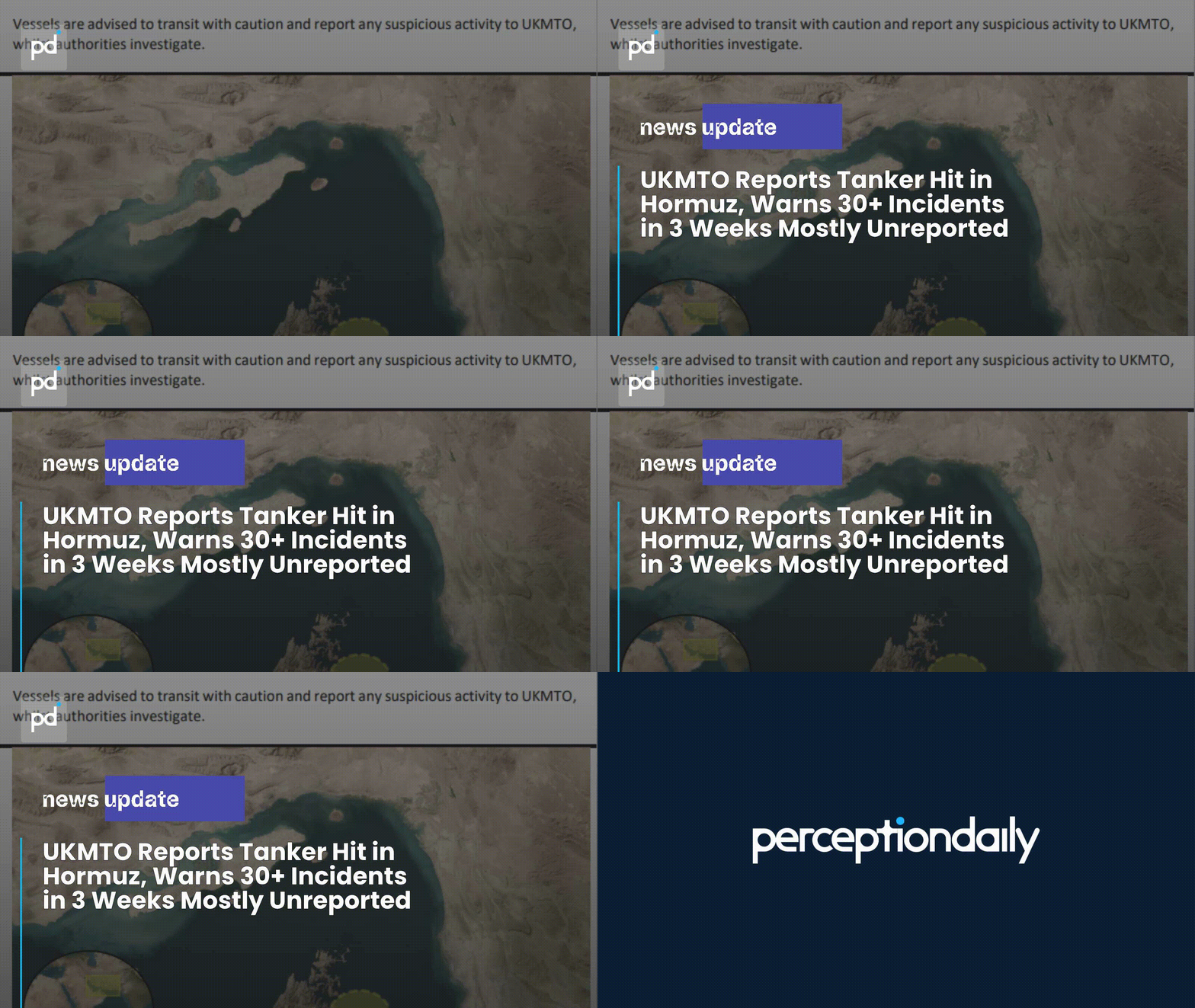
The Revolutionary Guards announced they struck a tanker attempting to transit the Strait of Hormuz. The vessel caught fire. It is the latest attack in a series that already recorded a dozen incidents between September 28 and October 2. Actual transit through Hormuz is estimated by IMF PortWatch at just 4 crossings on October 4, against a pre-crisis baseline of roughly 85 per day.
---
🚀 IRANIAN MISSILES — 576+ LAUNCHES SINCE JULY 7
JINSA has counted at least 576 Iranian missiles and drones launched since July 7. Only four between October 7 and 9. The pace slows but does not stop. Bloomberg, citing a Western official, reports Russian missile supplies to Tehran — a claim not independently verified.
---
✈️ HOUTHIS — RIYADH UNDER ATTACK
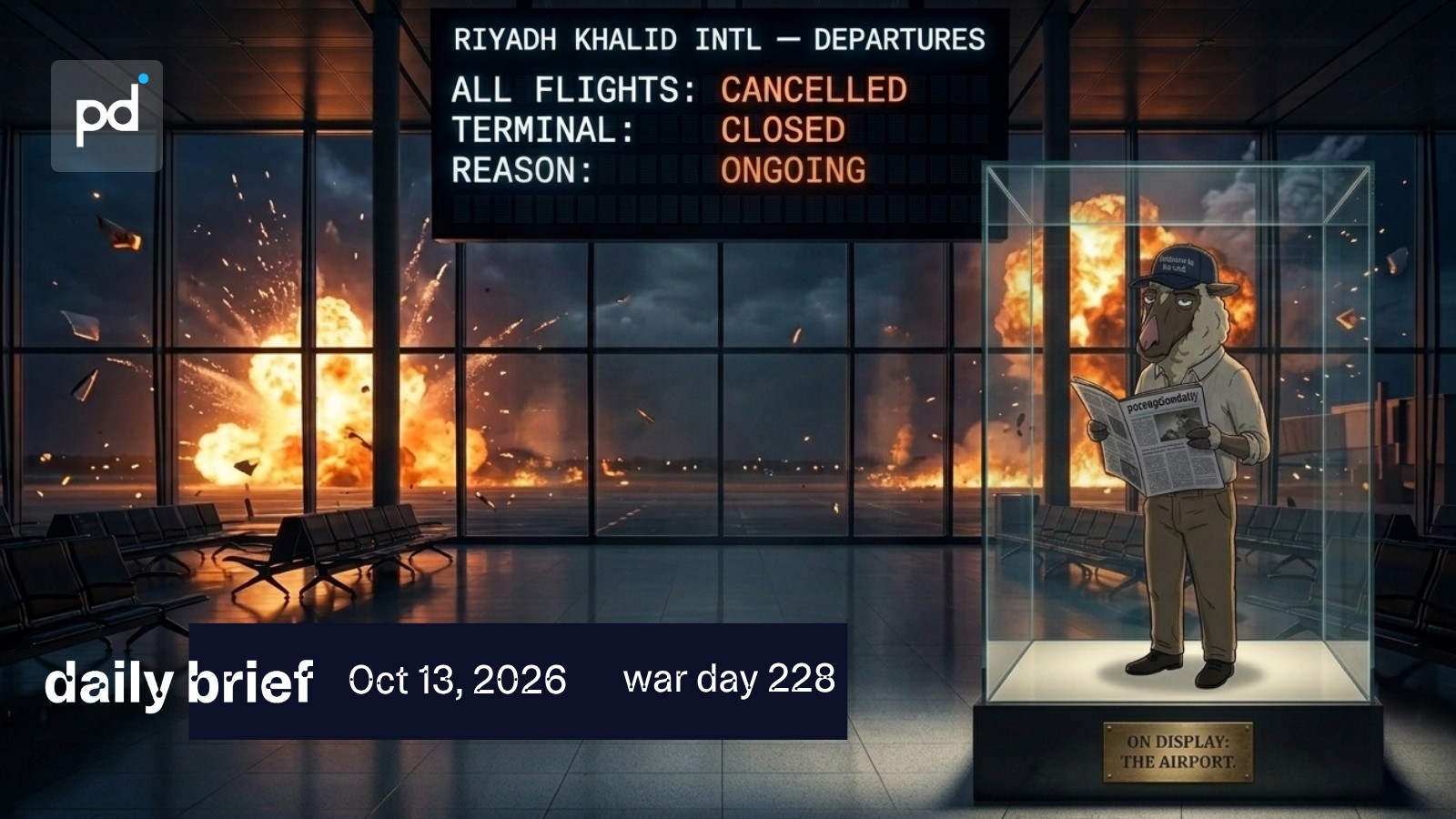
A Houthi ballistic missile struck Riyadh's King Khalid International Airport again on Saturday, killing 13 people. Saudi Arabia has opened an investigation into how its air defense systems failed to intercept the attack. The Houthis have explicitly threatened all flights to Saudi airports, with the exception of Mecca and Medina.
---
🛡️ USA — NAVAL BLOCKADE HOLDS, STRIKES FROZEN
The US Navy disabled a cargo vessel after its crew ignored warnings and attempted to run the naval blockade of Iran's ports. No American airstrike on Iranian territory was reported between October 8 and 10. The blockade remains in force. The USS Abraham Lincoln returned to San Diego after a 321-day deployment.
---
🤖 IRANIAN MISSILE PRODUCTION — STILL STANDING
October intelligence assessments confirm Iran has maintained its underground missile and drone manufacturing capabilities despite months of targeted airstrikes. Tehran can quickly replenish its strategic military stockpiles from heavily fortified facilities that were never destroyed.
🔑 KEY DEVELOPMENT OF THE DAY
THE NUCLEAR CLAUSE THAT IS BREAKING THE TABLE
The most underreported development today is not the burning tanker or the missile on Riyadh. It is Tehran's position in the diplomatic track. Iran wants to return to the Islamabad Memorandum — signed in June by Trump and Pezeshkian — which laid out a roadmap without explicitly prioritizing the nuclear issue. Washington is now inserting binding nuclear clauses into its new proposals. Tehran accuses the US of "undermining diplomacy." Iranian Foreign Ministry spokesman Baghaei confirmed a counterproposal will come through mediators. But the structural gap between the two positions — whether to address the nuclear file now or later — is exactly the same gap that killed every previous round of talks. The American electoral calendar gives Tehran a six-week window to gain negotiating ground without risking strikes.
☄️ DON'T LOOK UP
Today: Brent above $105. Petrol and diesel in Europe at spring highs. Naval rerouting is extending delivery times for industrial goods.
Within 30 days: If no deal before November 5, new post-midterm US strikes could push Brent toward $115-120. Further rises at the pump.
If Hormuz stays closed beyond May: Europe — dependent on alternative pipelines and LNG — risks a second-generation winter energy crisis. Structural inflation impossible to absorb through monetary policy alone.
⚡ ENERGY AND MARKETS
Brent: around $105-106 per barrel (October 12), up 1.2% in the session. WTI at around $92-93 per barrel. Hormuz throughput estimated by Kpler is 40% below pre-war levels for the week to October 7. The 2026 peak was above $126. Goldman Sachs estimates Gulf exports recovered to approximately 23.3 million barrels per day in September, but including cargoes moving with transponders off. Saudi Aramco warns: inventories are thin, markets will stay under pressure until Hormuz fully reopens.
📌 PERCEPTION INDEX - how to read it
⬇️ YOU ARE UNDERESTIMATING IT - more important than it seems
⬆️ YOU ARE OVERESTIMATING IT - emotional reaction > real weight
🌡️ CALIBRATE - reality is more nuanced than the dominant narrative
📊 PERCEPTION INDEX - SUMMARY
🔴 US-Iran Diplomacy ............... ⬇️ The nuclear gap is structural, not tactical
🔴 Houthi Attacks on Riyadh ......... ⬇️ Reshaping regional balance more than it seems
🔴 Iranian Missile Production ........ ⬇️ Not destroyed: intelligence now confirms this
🟡 US Strike Pause .................. 🌡️ An electoral choice, not a strategic one
🟡 Brent at $105 ................... 🌡️ Below peak, but held up by structural factors
🟡 US Naval Blockade ................ ⬆️ Less effective than officially presented
🟢 Chances of a quick deal .......... ⬆️ The nuclear gap cannot be solved in six weeks
🎖️ PERCEPTION DEFCON INDEX
🔴 DEFCON 1 — ACTIVE TOTAL WAR
We remain at the maximum level since February 28. The pause in American strikes is tactical and temporary, not a de-escalation signal. Hormuz keeps burning tankers. The Houthis are hitting regional civilian infrastructure. Iran is rebuilding its missile capabilities.
⚡ ESCALATION TRIGGERS:
— Houthi or Iranian attack on a US base or personnel with significant casualties
— Failure of the post-November 5 diplomatic round and Trump's decision to resume strikes
🟢 DE-ESCALATION SIGNALS:
— Agreement on a technical Hormuz truce mediated by Qatar/Pakistan before end of October
— Trump drops nuclear clauses as a precondition for a new ceasefire
perceptiondaily by thesmallmediacompany warfare intelligence. next brief: tomorrow at 7.00am.