perceptiondaily — brief june 24 2026
The US Senate votes to halt Trump's Iran war powers. Tehran denies nuclear inspections Vance claims are agreed. Rubio tours the Gulf. Hormuz reopens at a crawl. The ceasefire holds — but only on paper.
🚨 OPENING
THE DEAL NOBODY REALLY SIGNED
The US-Iran ceasefire exists on paper. In practice, the two sides are negotiating in parallel universes. While Rubio landed in the UAE to reassure Gulf partners, Iranian President Pezeshkian was in Islamabad declaring that Iran's ballistic missiles will never be a subject of negotiation — not in the MoU, not in the final deal, not ever. Washington claims otherwise.
But the most immediate breaking point is something else: nuclear inspections. Vice President JD Vance, fresh from the Burgenstock talks in Switzerland, publicly declared that Tehran had agreed to allow IAEA inspectors back into bombed nuclear sites. Iran denied it point by point. The IAEA itself confirmed it has had no access to damaged nuclear sites for nearly a year. Director General Grossi had already been explicit: without inspections, any agreement is "an illusion of an agreement."
Meanwhile, the US Senate voted 50-48 — for the first time in recent history — to direct Trump to remove US forces from hostilities against Iran under the 1973 War Powers Act. The move is largely symbolic — Congress cannot legally bind the president — but it is politically damaging. Trump fired back at the senators. The script is familiar. The signal, less so.
📍 MILITARY SITUATION
🚢 HORMUZ — Slow traffic recovery
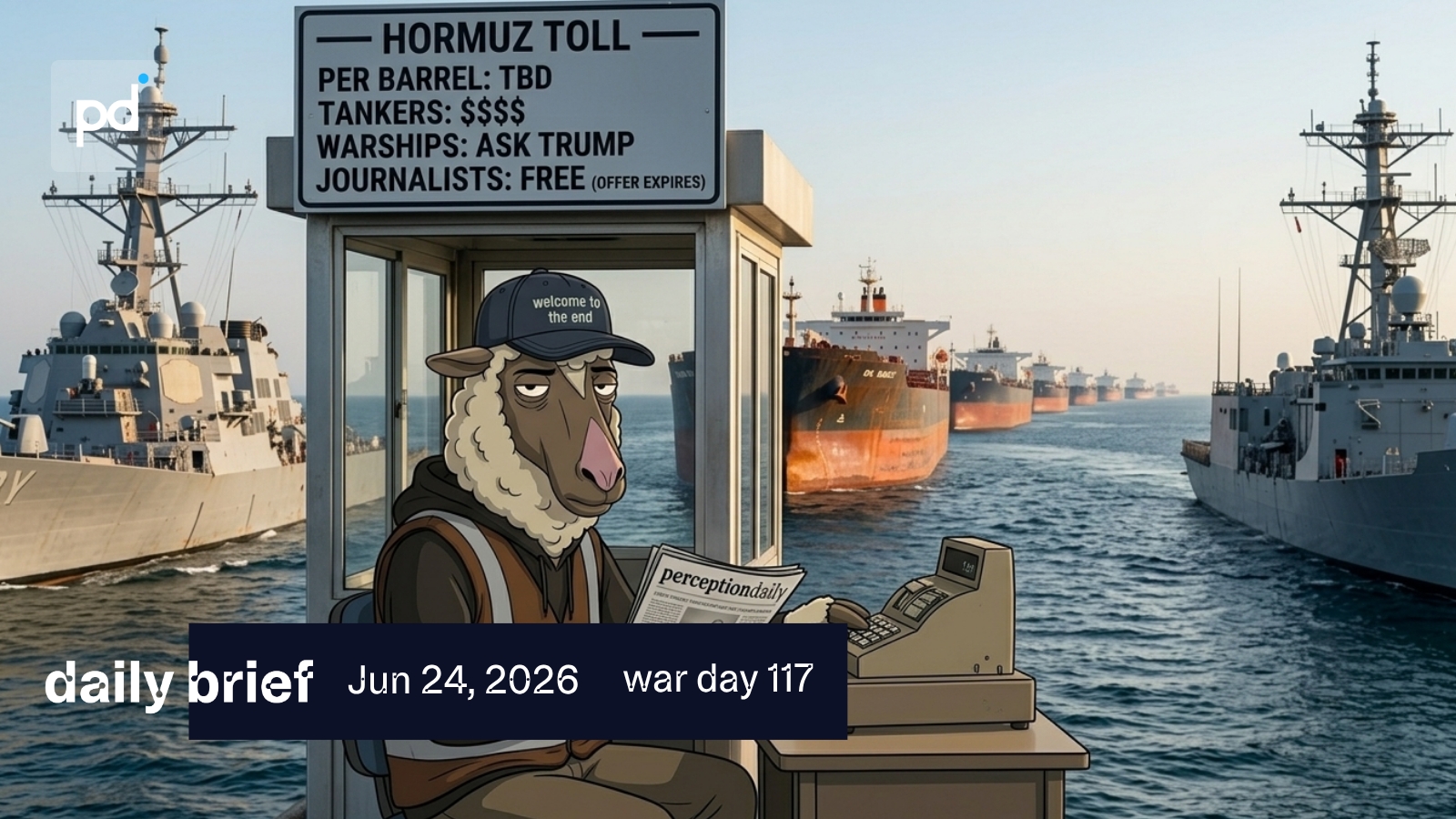
Around 39 ships transited the strait on Monday, a wartime record but still only a third of pre-war levels (~120/day). Rubio in Dubai declared: no Iranian tolls on Hormuz will be accepted. Tehran and Oman have already opened a joint file on "shared management" of the waterway with "associated costs." Direct friction underway.
🇮🇱 LEBANON — Ceasefire violated, again
Israeli troops opened fire in Nabatieh al-Fawqa, killing two people. Netanyahu reiterated "full freedom of action" for the IDF in Lebanon. National Security Minister Ben-Gvir: "Trump's agreement does not bind us."
🔬 NUCLEAR — Verifiable impasse
The IAEA has had no access to any nuclear sites hit since June 2025. Washington says Tehran "accepted inspections." Tehran denies it. The four technical working groups formed at Burgenstock have yet to begin work.
💸 FROZEN FUNDS — $12 billion unlocked, dispute ongoing
Iran's central bank governor acknowledged funds could be used to buy US farm products — but denied it was an obligation. Trump: "A great deal for our farmers." Tehran: "False."
🔑 KEY DEVELOPMENT OF THE DAY
THE SENATE VOTE: SYMBOLIC BUT STRUCTURALLY LETHAL
The 50-48 Senate vote was nearly drowned out by the noise around nuclear inspections. Yet it is the most structurally significant development of day 117. For the first time in recent history, both chambers of the US Congress have adopted a resolution directing the president to remove US armed forces from hostilities with Iran under the 1973 War Powers Act. Four Republicans voted with Democrats.
The resolution is not legally binding — Trump is not required to comply — but it creates a political and legal precedent that can be used in courts, by the media, and by the opposition to challenge any future military escalation. If talks collapse and Trump wants to strike again, he will do so knowing Congress is formally on record against it.
☄️ DON'T LOOK UP
Today: Brent below $77. Fuel prices at European pumps set to drop in coming weeks.
Within 30 days: If nuclear inspections don't start, the MoU risks collapse. Energy markets would turn volatile again.
If Hormuz remains contested beyond July: 500 vessels stuck in the region stay stuck, European natural gas prices rise again, winter 2026-2027 energy bills climb significantly.
⚡ ENERGY AND MARKETS
Brent crude: ~$77.2/barrel (three-month low). WTI: ~$73.1/barrel. Markets are pricing the best-case Hormuz reopening scenario. Washington issued a 60-day licence for Iranian oil sales on international markets. Goldman Sachs cut its Q4 2026 Brent target to $80/barrel. Key risk: any politically-driven Hormuz closure — Lebanon or nuclear — would unravel the price relief within 48 hours.
📌 PERCEPTION INDEX - how to read it
⬇️ YOU'RE UNDERESTIMATING IT - more important than it looks
⬆️ YOU'RE OVERESTIMATING IT - emotional reaction > actual weight
🌡️ CALIBRATE - reality is more nuanced than the dominant narrative
📊 PERCEPTION INDEX - SUMMARY
🔴 US Senate vote (War Powers Act) ............... ⬇️ Historic legal precedent — underreported
🔴 Iran nuclear inspections ...................... ⬇️ The hinge that could break the entire deal
🔴 Pezeshkian on ballistic missiles .............. 🌡️ Red line declared — non-negotiable
🔴 Hormuz — traffic recovering ................... ⬆️ Still one-third of normal — premature euphoria
🔴 Rubio Gulf tour ................................ 🌡️ More ally reassurance than real diplomacy
🔴 Lebanon — ceasefire violations ................ ⬇️ Could freeze the entire US-Iran process
🔴 Brent at $77 .................................. ⬆️ Markets pricing peace before it exists
🎖️ PERCEPTION DEFCON INDEX
🟠 DEFCON 2 — ACTIVE CRISIS WITH DIPLOMATIC WINDOWS
The ceasefire holds formally, but contradictions are stacking up. The US and Iran are reading the same MoU in opposite ways on three critical points: nuclear inspections, ballistic missiles, and Lebanon. De-escalation is real in markets — not yet in politics.
Escalation triggers:
— Collapse of technical talks on nuclear sites → resumption of US strikes
— New Israeli offensive in Lebanon → Iran closes Hormuz again
De-escalation signals:
— IAEA gains access to an Iranian nuclear site within 14 days
— Netanyahu accepts a road map for withdrawal from the Litani area
🐑 SHEP: "The Senate votes to stop a war that's technically over. Markets celebrate a deal both sides read differently. Same old script — just more lawyers this time."
perceptiondaily by thesmallmediacompany warfare intelligence. next brief: tomorrow at 7.00am.