perceptiondaily — brief june 23 2026
Vance says Iran agreed to nuclear monitors. Tehran denies it. Rubio heads to the Gulf. Post-MoU diplomacy is already deadlocked on the one thing that matters most: who controls what was actually agreed.
🚨 OPENING
The deal nobody can explain the same way
The Memorandum of Understanding signed on June 17 in Versailles was supposed to be the turning point. Six days later, it's already a narrative battlefield. US Vice President JD Vance said Tehran has agreed to admit nuclear monitors into the country, while Iran denied making any new commitments. Two incompatible versions of the same table, simultaneously, in front of the world.
This is not a diplomatic incident. It is the exact structure of the problem. The MoU was signed with calculated ambiguities to allow both sides to return home with a victory. Now those ambiguities are surfacing. Vance said four objectives had been accomplished — allowing the nuclear inspectors, building a mechanism to open the Strait of Hormuz, building a mechanism for "deconfliction for the regional ceasefire" in Lebanon, and stepping up a process for future negotiations. Iran has not publicly confirmed that list.
Secretary of State Marco Rubio will travel to the United Arab Emirates, Kuwait and Bahrain from Tuesday through Thursday to "discuss a range of regional priorities including the memorandum of understanding with Iran." The trip has a clear objective: hold the Gulf coalition together around the MoU before it crumbles from within.
📍 MILITARY SITUATION
🇮🇱 LEBANON — CENTCOM ACTIVATES MONITORING MECHANISM
The United States has set up a "monitoring mechanism" for the fragile ceasefire in Lebanon as repeated violations by Israel and Hezbollah have threatened to derail US-Iran negotiations. Secretary of State Rubio spoke with both Israeli Prime Minister Netanyahu and Lebanese President Aoun "about solidifying ceasefire and future talks."
---
🇮🇷 IRAN — DENIES NUCLEAR INSPECTOR COMMITMENTS
Iran's nuclear program remains a major point of contention after Vice President JD Vance said Tehran had agreed to admit nuclear inspectors, a claim Iranian officials have denied.
---
🇮🇱 ISRAEL — NO WITHDRAWAL FROM LEBANON
Israeli Defense Minister Israel Katz stated that his country's military "will not withdraw from the security zone in Lebanon" and that the IDF are free "to act to eliminate threats." "Preserving the lives of our soldiers and citizens is a top and absolute priority," Katz added.
---
🌡️ CALIBRA — The war ended on June 17 on paper. On the ground, Israel continues operating in Lebanon, Hezbollah has not disarmed, and Iran has not yet allowed inspections. The "end of the war" is a negotiating framework, not a military fact.
---
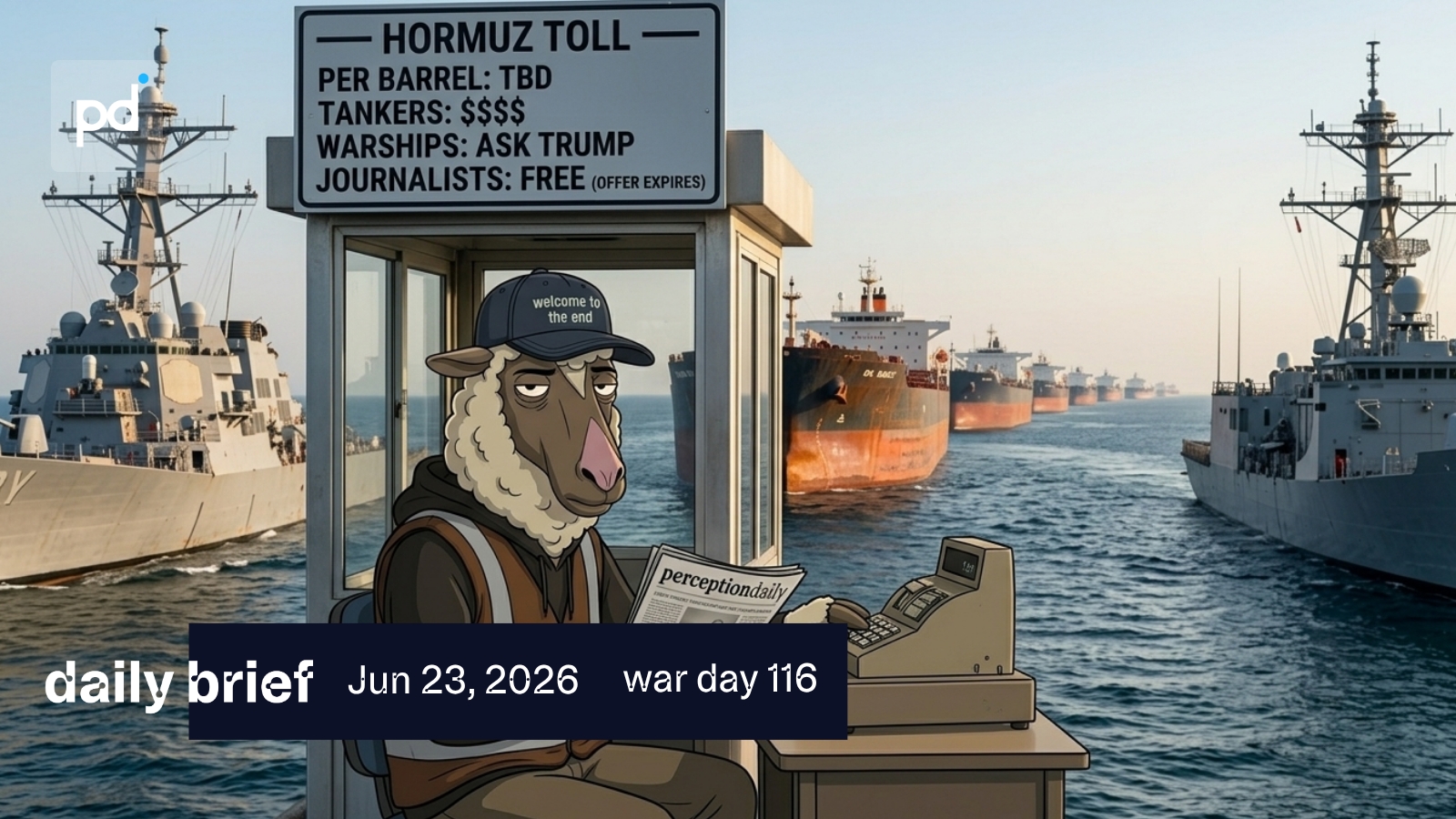
🚢 STRAIT OF HORMUZ — PARTIAL REOPENING, RESIDUAL TENSIONS
Commercial traffic through the Strait of Hormuz rose sharply after Iran and the United States agreed to reopen the waterway under their deal to end the war. US Central Command stated that the Strait of Hormuz remained open: "Iran does not control the Strait of Hormuz," CENTCOM spokesman Navy Captain Tim Hawkins said. "Traffic continues to flow, and U.S. forces are monitoring the situation to ensure this remains the case."
🔑 KEY DEVELOPMENT OF THE DAY
Rubio's Gulf tour is today's most underrated development. It is not a courtesy visit. Iran repeatedly attacked those countries during the course of the war — and even during the nominal ceasefire — causing casualties, including the deaths of six US service members. During his trip, Rubio will discuss "a range of regional priorities including the memorandum of understanding with Iran, efforts to secure full and free safe transit through the Strait of Hormuz, and the importance of peace and stability in the region." In Bahrain, he will meet with the Gulf Cooperation Council, expected to play a key role in implementing the MoU.
☄️ DON'T LOOK UP
Today: Fuel prices in Europe remain above pre-war levels. In the US, gas prices rose from under $3 a gallon to well over $4 during much of the war, costing American households more than $253 above what they would have paid without the conflict. Similar dynamics apply across Europe.
Within 30 days: If Lebanon reignites, Hormuz closes again. Iran already announced the closure of the Strait on June 20, citing Israeli actions as a violation of its agreement with the US. The precedent is set.
If Hormuz stays closed beyond May: The oil market would not normalize before 2027, according to Saudi Aramco CEO Amin Nasser: "If the Strait of Hormuz opens today, it will still take months for the market to rebalance."
⚡ ENERGY AND MARKETS
Crude oil stabilized near $74 per barrel as investors assessed signs of initial progress in ongoing peace negotiations between the US and Iran in Switzerland. Washington granted Iran a 60-day license to sell oil on international markets. Traffic through the Strait of Hormuz has also picked up, with producers including Kuwait and the UAE finding alternative routes, while Iran shipped more than 30 million barrels over the past week. A full reopening of Hormuz could release about 80 million barrels into the market, adding pressure to prices as demand remains weak.
📌 PERCEPTION INDEX - how to read it
⬇️ YOU'RE UNDERESTIMATING IT - more important than it seems
⬆️ YOU'RE OVERESTIMATING IT - emotional reaction > real weight
🌡️ CALIBRATE - reality is more nuanced than the dominant narrative
📊 PERCEPTION INDEX - SUMMARY
🔴 Iran denial on IAEA ................. ⬇️ More serious than it looks: undermines the entire MoU
🔴 Vance "optimistic" on Switzerland ... ⬆️ Tactical optimism, does not reflect negotiating reality
🔴 Rubio's Gulf tour ................... ⬇️ Signals coalition fragility, not a formality
🔴 Lebanon ceasefire holding ........... 🌡️ Holds formally, but Israel operates and Hezbollah responds
🔴 Hormuz - traffic recovering ......... 🌡️ 25 ships/day vs. 80+ pre-war: "open" is relative
🔴 Brent at $74 ........................ ⬆️ Dropping from $120 to $74 is relief, but crisis isn't closed
🔴 Nuclear deal - "road map" ........... ⬇️ 60 days of talks on a dossier 20 years in the making
🎖️ PERCEPTION DEFCON INDEX
🟠 DEFCON 2 — Fragile pact, structurally high tension
The MoU exists, but every key clause is contested. While Iran and the United States announced that they had reached an agreement to end the war on June 17, the deal requires Washington, Tehran, and their allies to declare an immediate and permanent termination of military operations on all fronts, including Lebanon. That clause remains unimplemented.
Escalation triggers:
— Iran formally denies IAEA inspectors → immediate diplomatic collapse
— New Israeli strike on Beirut → Iran closes Hormuz, oil spikes back above $100
De-escalation signals:
— Concrete start of technical talks in Switzerland this week
— Lebanon agreement with partial Israeli withdrawal and Hezbollah commitment
perceptiondaily by thesmallmediacompany warfare intelligence. next brief: tomorrow at 7.00am.