perceptiondaily — brief august 12 2026
Hormuz stays shut. Iran holds firm, Pakistan mediates, Trump demands reparations from Tehran after Tehran demanded them first. The deal that was supposed to happen today evaporates — again — as markets swing and the world waits.
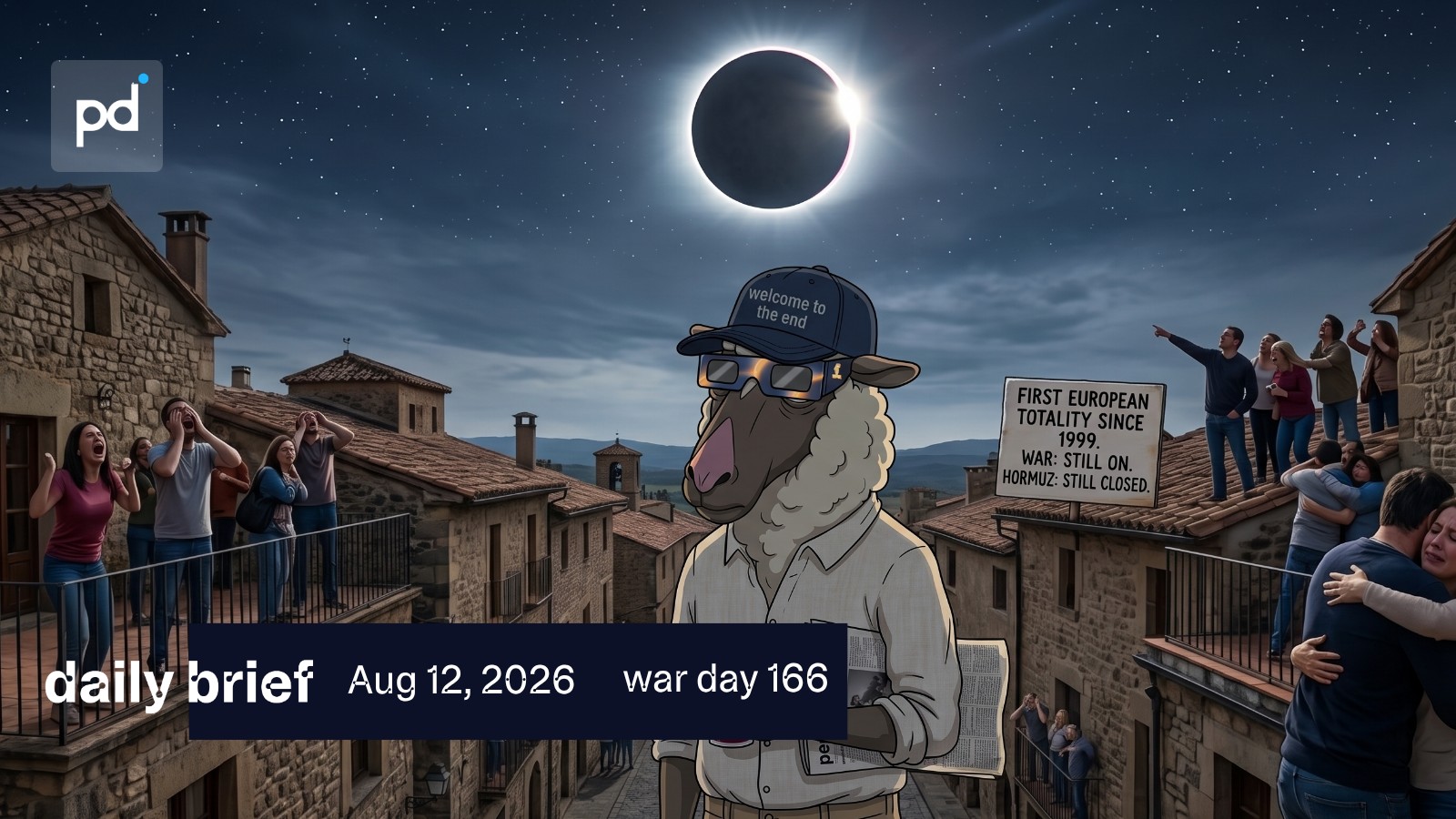
🚨 OPENING
The deadline that wasn't: August 12 comes and goes, Hormuz still closed
Today was supposed to be the day. Axios had reported it plainly: Washington was targeting August 12 for a deal announcement — a provisional Iran-Oman-US agreement to reopen the Strait. Trump had stood down a massive bombing campaign for the fourth confirmed time to allow more room for diplomacy, with US sources pointing to Wednesday as the target date.
Nothing happened. Iran held firm on its conditions for reopening the Strait of Hormuz on the very day Pakistan's Interior Minister Mohsin Naqvi arrived in Tehran for talks. Tehran's message was unambiguous: Hormuz stays shut until the US meets its terms. Pakistani diplomacy keeps spinning, but the mechanism has jammed on a new and toxic sticking point: war reparations.
On Monday, Trump fired back at Iran's demand for war compensation with a mirror counter-demand. Trump said he was seeking compensation from Tehran for 50 years of damages caused by Iran — a direct response to Tehran's condition of receiving reparations before reopening Hormuz. Two countries demanding money from each other in the middle of a peace negotiation. The level of surreal is high. The concrete risk is higher: every day without a deal is another day Hormuz stays shut, and the world keeps paying the price.
📍 MILITARY SITUATION
🚢 HORMUZ — traffic collapse
Hormuz, which before the war carried about one-fifth of global oil supply, has seen a near-total collapse in traffic. Between August 4 and 6, only 8 to 15 vessels transited daily, compared to roughly 130 before the conflict.
---
🛳️ MARITIME INCIDENT — tanker in the Gulf of Oman
The UK Maritime Trade Operations Centre (UKMTO) reported Tuesday morning an incident involving a tanker and military forces in the Gulf of Oman, near the Strait of Hormuz. Vessels advised to maintain maximum awareness of the evolving operational environment.
---
🚫 US NAVAL BLOCKADE — vessel fired upon
US forces reportedly fired on a Panama-flagged vessel that attempted to bypass the naval blockade of Iran.
---
🇾🇪 HOUTHIS — attacks in Gulf and Red Sea
Houthi forces conducted attacks on shipping in the Gulf and the Red Sea on the same day Iran confirmed its Hormuz conditions. The southern front is widening.
---
🇮🇱 ISRAEL — maximum alert confirmed
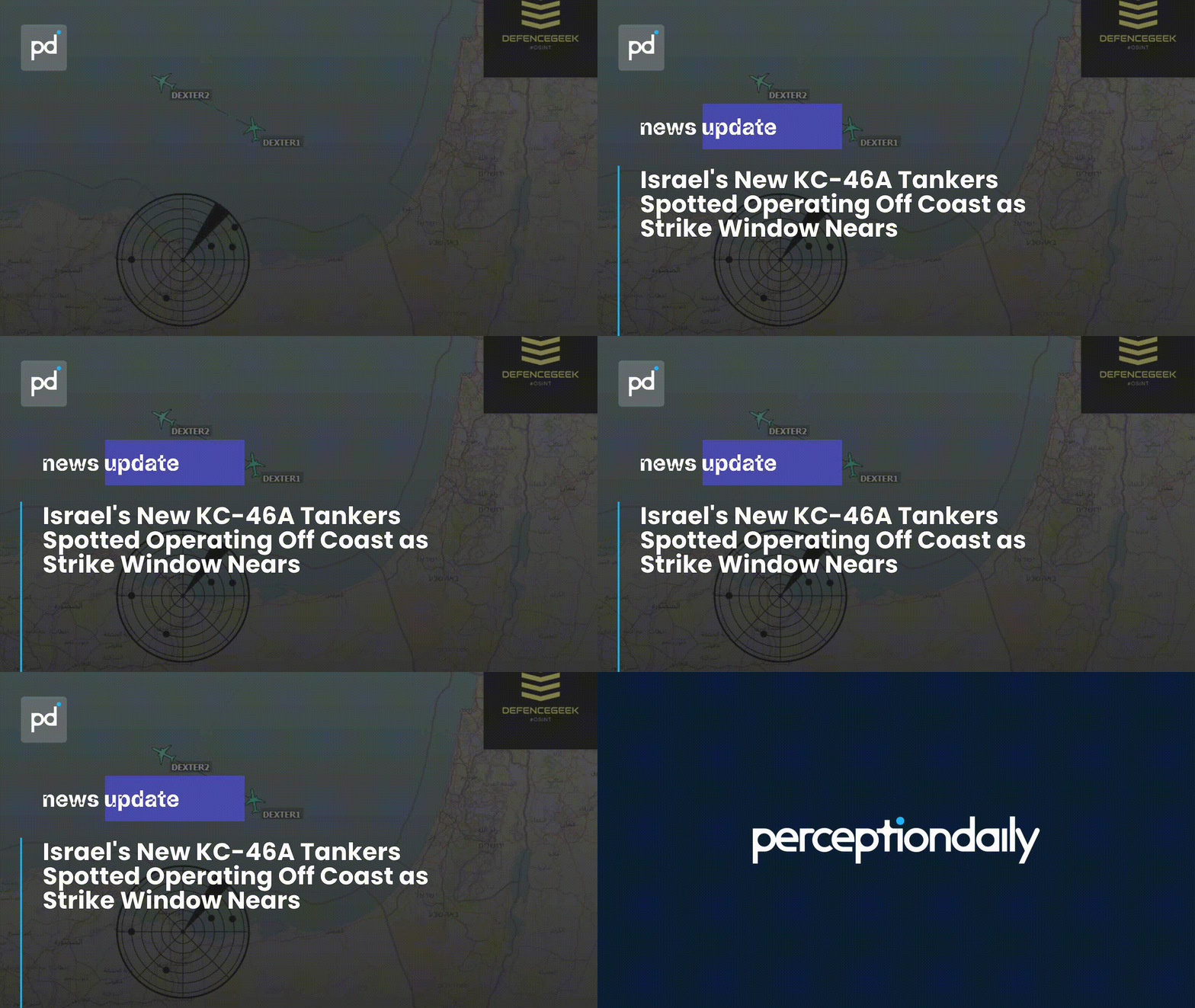
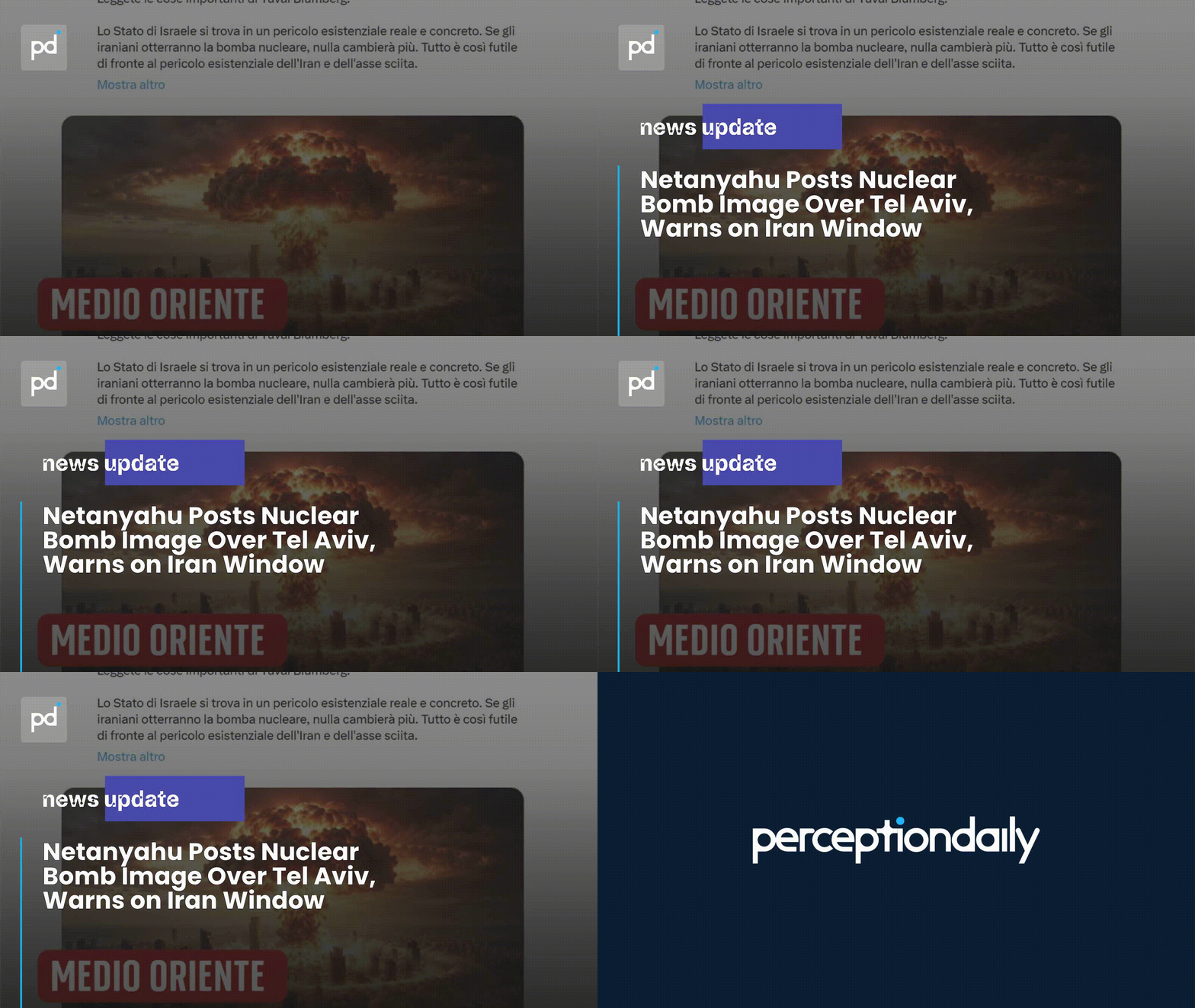
Israel assesses Iran may launch ballistic missiles even if the IDF does not initially join a new US offensive. Israel is on its highest alert level.
---
⛽ US RESERVES — lowest since 1983
US Strategic Petroleum Reserve stocks have fallen below 300 million barrels, the lowest level since January 1983, as the conflict drags on.
🔑 KEY DEVELOPMENT OF THE DAY
The reparations battle: who pays whom?
This is the detail that could blow the whole thing up. Trump's move came after Tehran demanded Washington pay for the damages caused by the US-Israeli military operation since February 28. Reparations are among Iran's conditions for reopening Hormuz, alongside troop withdrawal, the lifting of sanctions and the naval blockade, the release of frozen assets, and an end to military threats.
This rhetorical escalation is not accidental. While Iranian officials signal that Tehran and Oman may be nearing a technical agreement, it remains deeply uncertain whether such a deal would lead to an immediate and full reopening of Hormuz. Iran's newly appointed National Security Council chief Mohsen Rezaei explicitly stated that any deal with Oman on strait control would remain separate from the question of reopening the waterway. Two parallel tracks that never meet. The technical side moves forward. The political side — reparations, sanctions, nuclear file — is stuck. And it is the political side that matters most to Tehran.
☄️ DON'T LOOK UP
Today: Brent above $88. Gasoline and diesel prices remain elevated across Europe. Energy bills high continent-wide with no sign of relief.
Within 30 days: If the deadlock extends beyond this week, market moves may not remain benign for long, Jefferies analysts warn. A new price spike is possible.
If Hormuz stays closed beyond May: Rising Chinese crude imports and Houthi attacks on Saudi infrastructure could push prices even higher. Energy-cost recession risk for several European economies by end of 2026.
⚡ ENERGY AND MARKETS
Brent around $88.91 per barrel at day open. Crude dipped toward $87 on Tuesday before recovering to $88.7 after Pakistan signalled progress in negotiations — gains quickly tempered by Trump's hardened tone. WTI around $82. US crude inventories rose 9.1 million barrels last week, the largest increase since February: a signal of demand weakness as markets wait for a deal. European TTF gas under sustained pressure.
📌 PERCEPTION INDEX - how to read it
⬇️ YOU ARE UNDERESTIMATING IT - more important than it seems
⬆️ YOU ARE OVERESTIMATING IT - emotional reaction > real weight
🌡️ CALIBRATE - reality is more nuanced than the dominant narrative
📊 PERCEPTION INDEX - SUMMARY
🔴 August 12 deadline missed ................. ⬇️ More serious than markets are pricing in
🔴 Cross-reparations demands Trump/Iran ....... ⬇️ Structural hardening, not mere rhetoric
🔴 Naqvi in Tehran — "close to a deal" ....... 🌡️ Pakistani optimism, but Tehran separates technical from political
🔴 Hormuz: 8-15 ships/day vs 130 pre-war .... ⬇️ Logistical collapse underway, underestimated in Europe
🔴 US blockade + fire on tanker .............. ⬇️ Silent physical escalation, barely covered
🔴 Houthis — Red Sea and Saudi attacks ....... 🌡️ Chronic irritant, not an immediate game-changer
🔴 US SPR below 300 million bbl .............. ⬇️ US strategic vulnerability underreported
🔴 "Deal is close" — repeated since June ...... ⬆️ Diplomatic noise with no verifiable substance
🎖️ PERCEPTION DEFCON INDEX
🔴 DEFCON 1 — Active War / Structural Diplomatic Deadlock
The war is technically under an extended ceasefire, but the naval blockade is active, ships are being fired upon, Houthis are attacking and Hormuz is 90% closed. Every missed deadline increases internal military pressure on Trump. The reparations standoff is a new and potentially insurmountable short-term obstacle.
Escalation triggers:
— Trump authorises new airstrikes after yet another missed deadline
— Iran responds to US fire on the Panamanian vessel with a direct strike on the US fleet
De-escalation signals:
— Iran and Oman sign technical agreement on Hormuz shipping routes within 48 hours
— Pakistan secures a freeze on the reparations issue and partial reopening of the Strait
perceptiondaily by thesmallmediacompany warfare intelligence. next brief: tomorrow at 7.00am.